Reducing Cognitive Load in Chromatography Workflows
In research environments, instrument performance is often measured in run time, resolution, and yield.
In research environments, instrument performance is often measured in run time, resolution, and yield.
But an equally important — and often overlooked — metric is cognitive load.
How much mental energy does a purification workflow require from the scientist?
In many labs, chromatography systems demand constant attention:
-
Verifying fluid paths
-
Confirming cleaning cycles
-
Managing calibration
-
Troubleshooting variability between operators
These tasks, while necessary, draw focus away from experimental design and data interpretation.
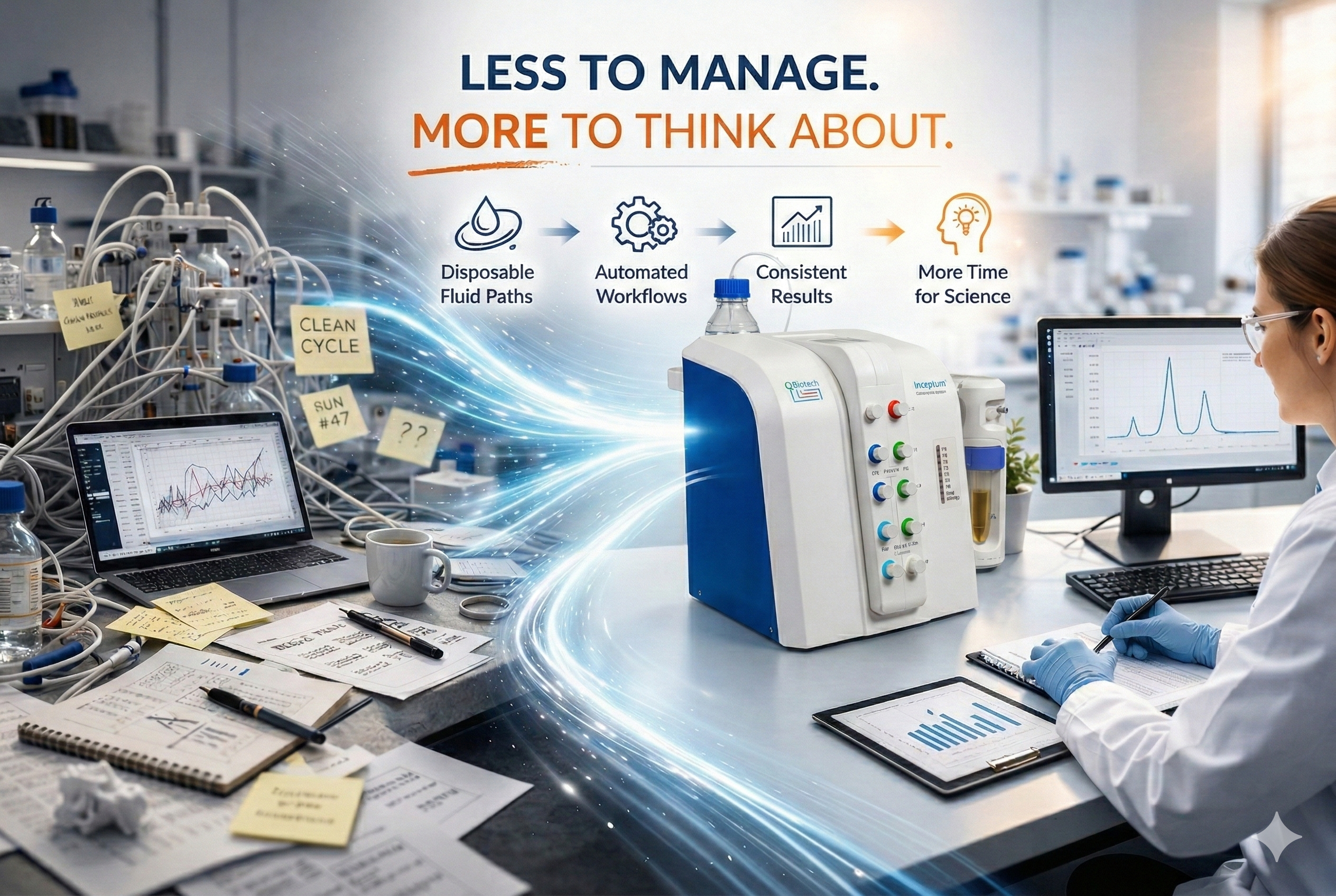
Q Biotech’s Inceptum™ system was built with a different objective: reduce the mental overhead associated with routine purification.
Disposable, integrated fluid paths eliminate concerns about residual carryover.
Standardized workflows reduce variability between users.
Automated reporting simplifies documentation and comparison.
The goal is not simply automation — it is clarity.
When scientists spend less mental energy managing equipment, they gain more capacity for analysis, creativity, and problem-solving.
In increasingly complex R&D environments, that mental bandwidth may be one of the most valuable resources in the lab.